
Infanteriegewehr 11
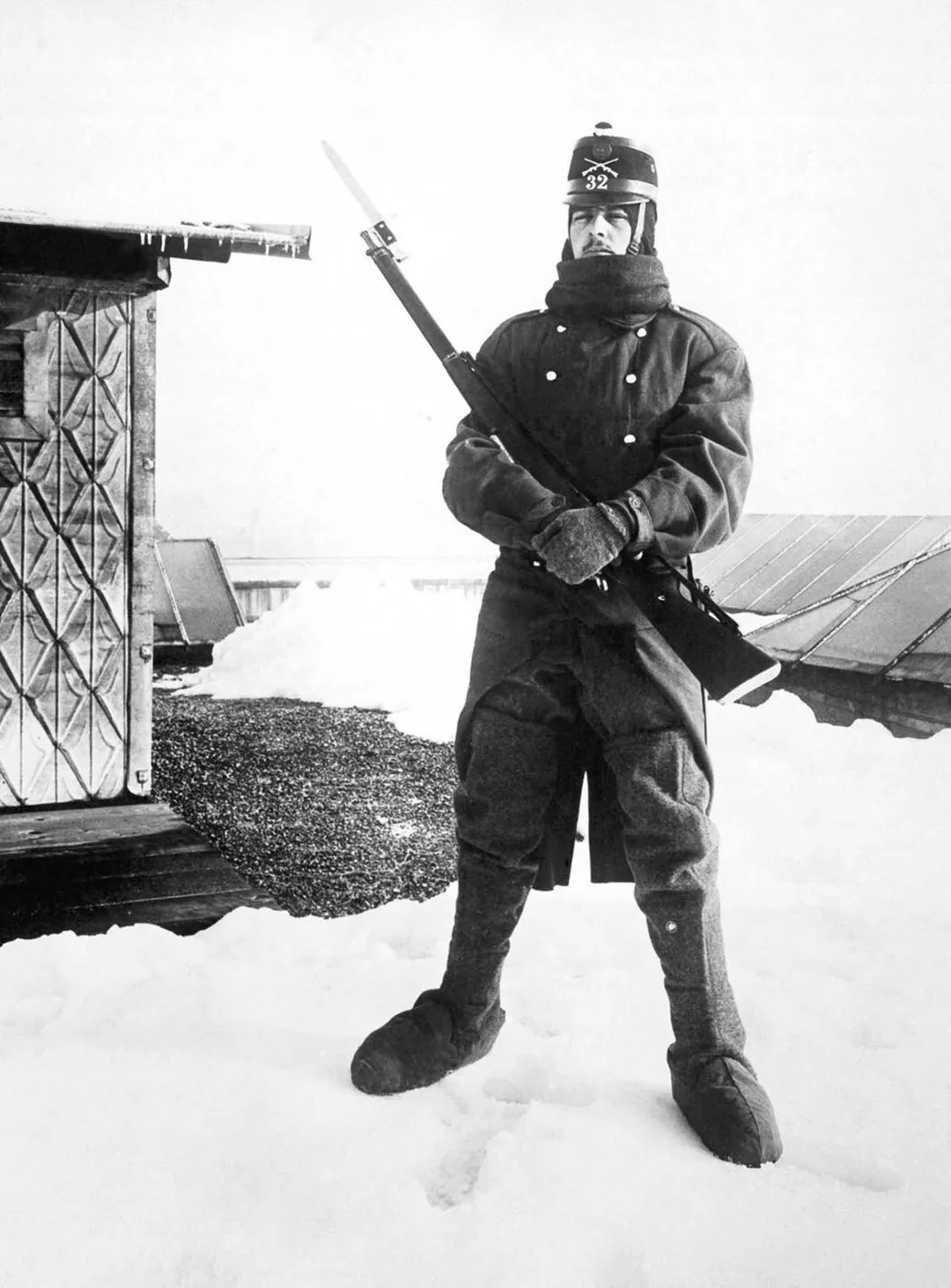
Famously neutral, the Swiss strategy through the Great War was deterrence. With two great powers warring right at its border, the Swiss soldier stood guard with a rifle famed for its accuracy to this day.

History
In addition to the 1896 infantry rifle, a small family of derivatives grew. A single-shot cadet rifle with a 23-inch barrel proved that a shortened Schmidt could work - something the cavalry, saddled with the loathed and maintenance-heavy Mannlicher-pattern Model 1893 carbine, had been asking for. The fortress artillery received the short rifle Model 1900, its use spreading to telegraphists, balloonists and cyclists, while the cavalry finally got its own Schmidt-action in the Karabiner 1905, which introduced a pistol grip stock to the platform.
By the early 1900s two problems loomed. The GP90 cartridge, once a marvel of flat shooting, had been overtaken by the spitzer revolution - France's Balle D of 1898, Germany's S Patrone of 1903, the American .30-06 of 1906. And the long rifle remained heavier than the army wished. Trials for a replacement beginning in December 1907 tested a mix of barrels, rifling, bullets and powders, and the resulting experimental cartridge was so successful that it was adopted with almost no changes as the Gewehrpatrone 1911 - a fast, flat-shooting spitzer round that made full use of the 1896 action's strength. The old 1889, by contrast, could not safely be trusted with it. Therefore, the model was excluded from the modernisation entirely.
As Swiss marksman culture forbade the shortening of the rifle to reduce weight for fear of a loss of accuracy, the full-length barrel and 2,000-metre sights stayed. Weight savings came instead from a six-round magazine (trials showed no practical difference in sustained reloading speed against the old twelve-round box), losing the magazine cutoff in the process, while the cavalry carbine's pistol grip was adopted for better handling. After trials of 900 long rifles, 100 short rifles and 100 carbines in 1909, the new pattern was officially adopted in 1911. Existing Gewehr 1896 rifles were converted, becoming the Gewehr 96/11, while some 126,700 Gewehr 1911 rifles were newly made. The short rifle and carbine patterns were merged into a single Karabiner 11, formally adopted in January 1913, with 184,250 new-made and 26,649 converted from earlier short models.
Switzerland never fought the Great War, but it was no distant observer - a neutral wedged between France and Germany, the "southern Belgium" that both powers potentially threatened. The IG11 served as part of the Swiss strategy of deterrence through the Great War, but it was the handy K11 that pointed the way to the future, when the Swiss would adopt a universal short rifle in 1931 - the K31.


Mechanism
Bolt
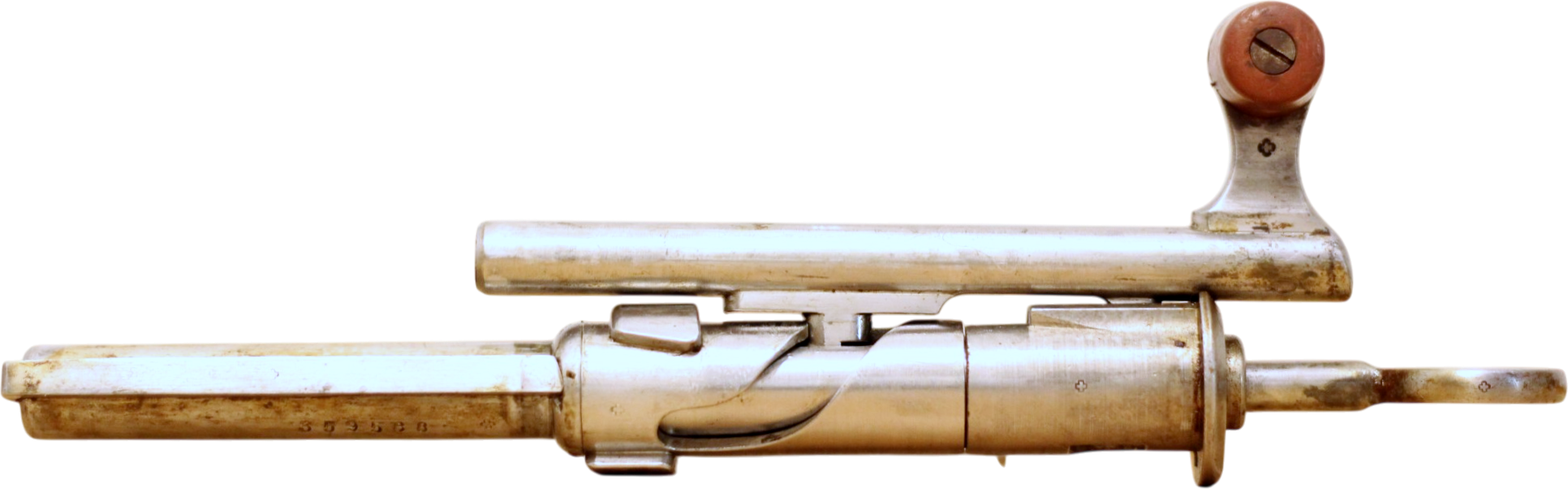
The Gewehr 1911 retains Schmidt's straight pull operation: a rearward tug on the ring-shaped handle draws an operating rod whose cam track rotates the bolt sleeve to unlock, extract and cock in a single motion, with the return stroke chambering and locking. The locking lugs, formerly at the very rear of the bolt sleeve, now sit forward at roughly mid-length - not at the bolt face, but comparable in support to a Lee-Enfield - while the bolt body itself is unchanged. The operating rod was extended rearward to preserve its bearing in the shortened receiver, and the camming geometry was kept such that the pull feels identical to the old IG89.
Magazine
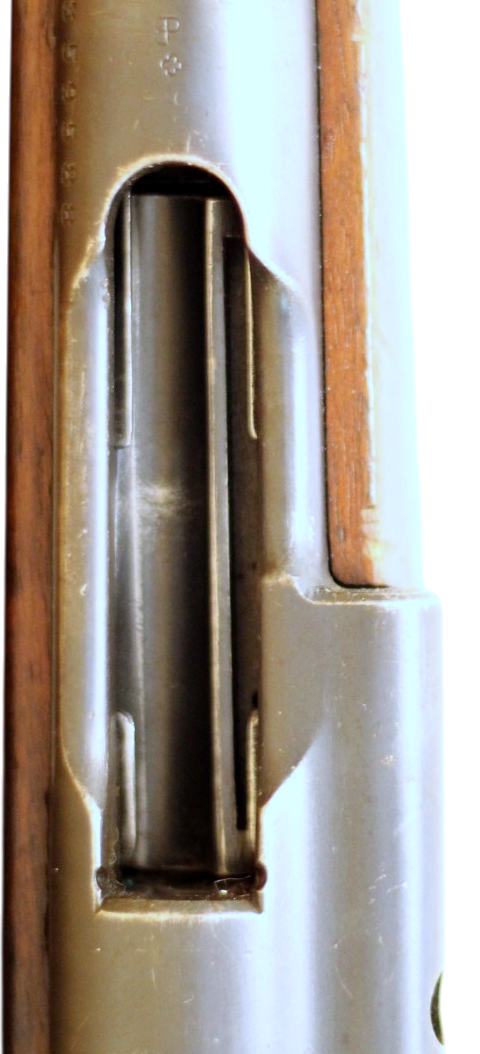
Feeding is from a detachable, double-stack, six-round box magazine - detachable for cleaning and maintenance rather than for rapid reloading. Charging is performed through the generously sized top port using the characteristic Swiss cardboard charger. The 1911-pattern receivers additionally carry small notches in the charger port for an experimental wide steel stripper clip; these were only ever used in trials and never issued, but the cuts remain on production guns.
Markings
PROOFS & PROPERTY MARKS
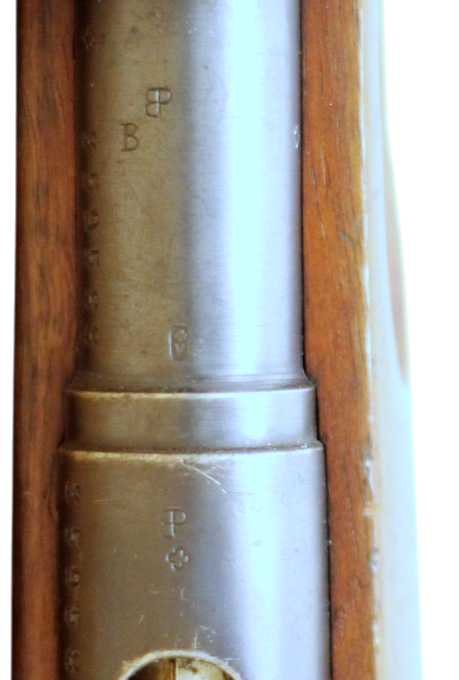
The stylised BP marking denotes a Swiss pressure proof. The large Swiss cross is for the accuracy acceptance, the small one for the overall acceptance and property marking.
Single letters are encoding the inspecting officer.
SERIAL NUMBER
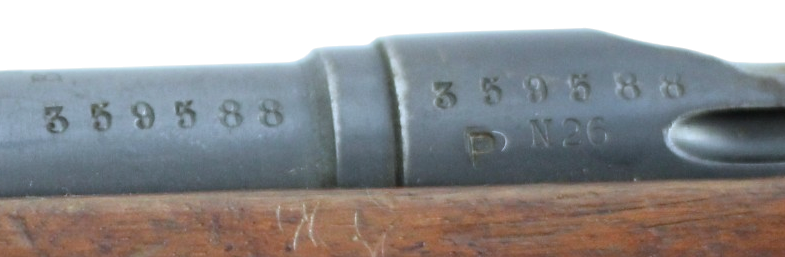
The serial number is a simple numerical one that can be found on various parts such as barrel and bolt.
Stock Markings
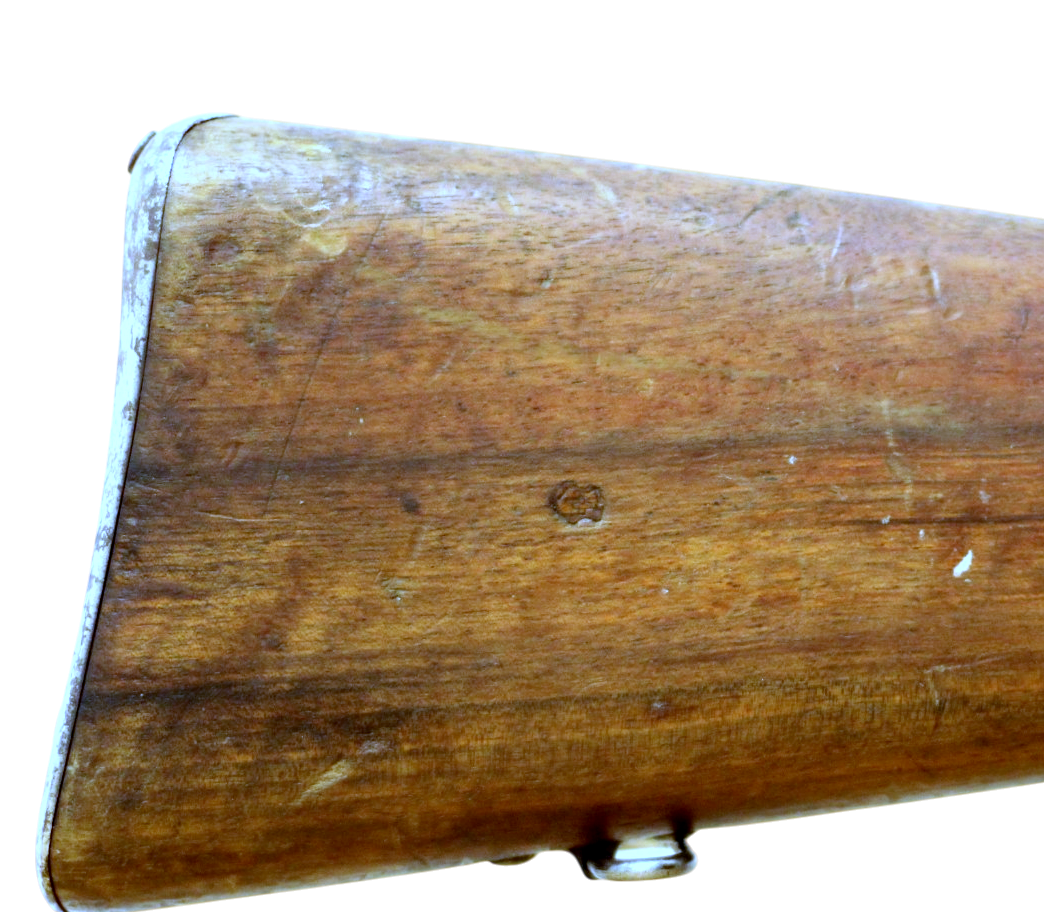
The stock will bear additional acceptance/property marks in the form of the Swiss cross upon a shield
History
In addition to the 1896 infantry rifle, a small family of derivatives grew. A single-shot cadet rifle with a 23-inch barrel proved that a shortened Schmidt could work - something the cavalry, saddled with the loathed and maintenance-heavy Mannlicher-pattern Model 1893 carbine, had been asking for. The fortress artillery received the short rifle Model 1900, its use spreading to telegraphists, balloonists and cyclists, while the cavalry finally got its own Schmidt-action in the Karabiner 1905, which introduced a pistol grip stock to the platform.
By the early 1900s two problems loomed. The GP90 cartridge, once a marvel of flat shooting, had been overtaken by the spitzer revolution - France's Balle D of 1898, Germany's S Patrone of 1903, the American .30-06 of 1906. And the long rifle remained heavier than the army wished. Trials for a replacement beginning in December 1907 tested a mix of barrels, rifling, bullets and powders, and the resulting experimental cartridge was so successful that it was adopted with almost no changes as the Gewehrpatrone 1911 - a fast, flat-shooting spitzer round that made full use of the 1896 action's strength. The old 1889, by contrast, could not safely be trusted with it. Therefore, the model was excluded from the modernisation entirely.
As Swiss marksman culture forbade the shortening of the rifle to reduce weight for fear of a loss of accuracy, the full-length barrel and 2,000-metre sights stayed. Weight savings came instead from a six-round magazine (trials showed no practical difference in sustained reloading speed against the old twelve-round box), losing the magazine cutoff in the process, while the cavalry carbine's pistol grip was adopted for better handling. After trials of 900 long rifles, 100 short rifles and 100 carbines in 1909, the new pattern was officially adopted in 1911. Existing Gewehr 1896 rifles were converted, becoming the Gewehr 96/11, while some 126,700 Gewehr 1911 rifles were newly made. The short rifle and carbine patterns were merged into a single Karabiner 11, formally adopted in January 1913, with 184,250 new-made and 26,649 converted from earlier short models.
Switzerland never fought the Great War, but it was no distant observer - a neutral wedged between France and Germany, the "southern Belgium" that both powers potentially threatened. The IG11 served as part of the Swiss strategy of deterrence through the Great War, but it was the handy K11 that pointed the way to the future, when the Swiss would adopt a universal short rifle in 1931 - the K31.
Mechanism
Bolt
The Gewehr 1911 retains Schmidt's straight pull operation: a rearward tug on the ring-shaped handle draws an operating rod whose cam track rotates the bolt sleeve to unlock, extract and cock in a single motion, with the return stroke chambering and locking. The locking lugs, formerly at the very rear of the bolt sleeve, now sit forward at roughly mid-length - not at the bolt face, but comparable in support to a Lee-Enfield - while the bolt body itself is unchanged. The operating rod was extended rearward to preserve its bearing in the shortened receiver, and the camming geometry was kept such that the pull feels identical to the old IG89.
Magazine
Feeding is from a detachable, double-stack, six-round box magazine - detachable for cleaning and maintenance rather than for rapid reloading. Charging is performed through the generously sized top port using the characteristic Swiss cardboard charger. The 1911-pattern receivers additionally carry small notches in the charger port for an experimental wide steel stripper clip; these were only ever used in trials and never issued, but the cuts remain on production guns.
Markings
PROOFS & PROPERTY MARKS
The stylised BP marking denotes a Swiss pressure proof. The large Swiss cross is for the accuracy acceptance, the small one for the overall acceptance and property marking.
Single letters are encoding the inspecting officer.
SERIAL NUMBER
The serial number is a simple numerical one that can be found on various parts such as barrel and bolt.
Stock Markings
The stock will bear additional acceptance/property marks in the form of the Swiss cross upon a shield