
Manufacturer & Model Designation
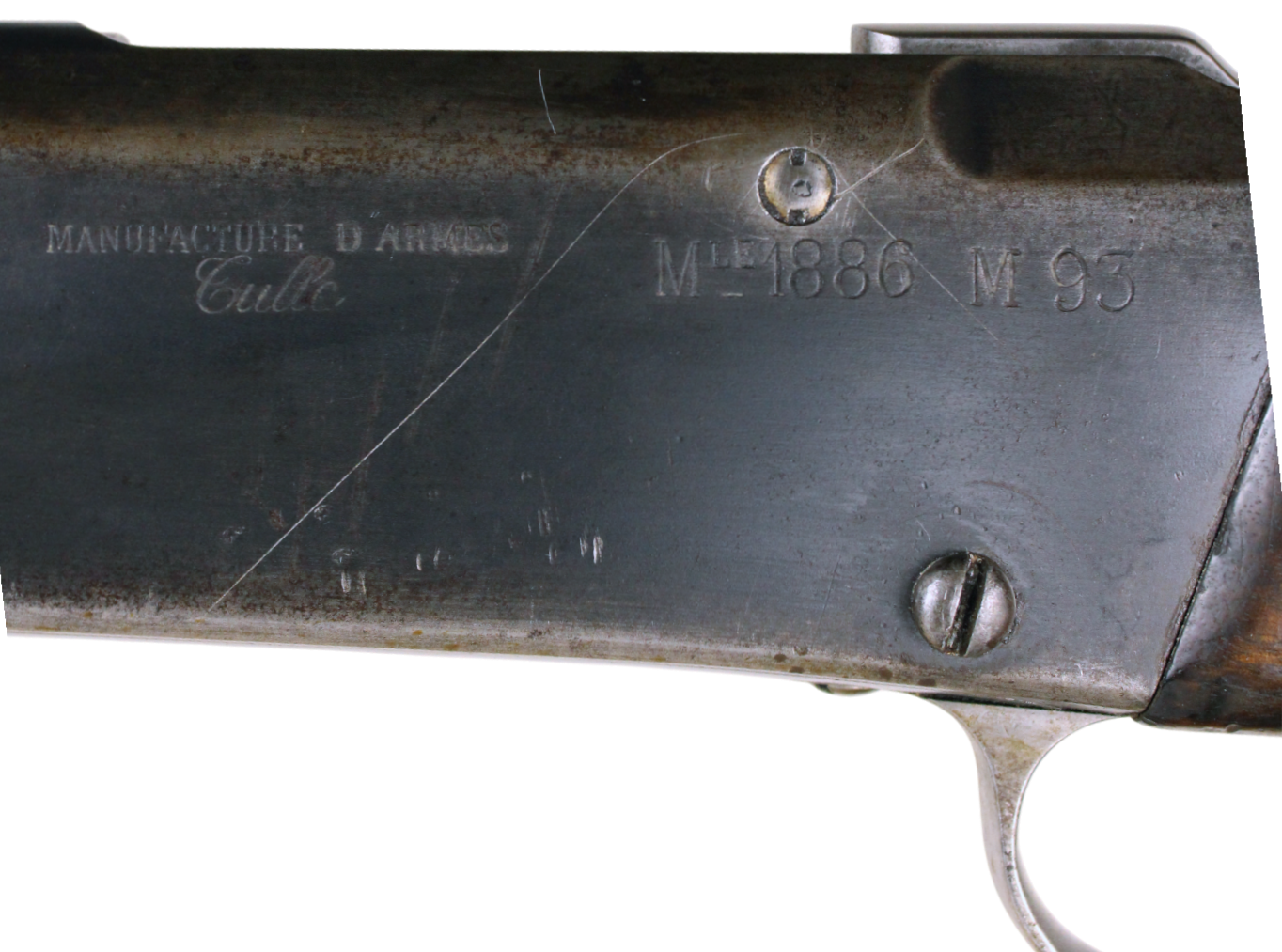
Two simple stamps on the receiver’s left side: “MANUFACTURE D’ARMES” with the arsenal’s location beneath in French script, and to the right the model designation, Mle 1886 M93.
In 1886 the history of small arms development changed overnight. The French had adopted a rifle built with smokeless powder in mind - the very first of its kind.

The development and introduction of the Lebel is much less a milestone in rifle design than in bullet design. The Modèle 1886 is a convergence point of two advances by two men: Swiss engineer Eduard Rubin (1846-1920) and French chemist Paul Vieille (1854-1934). Rubin had invented the jacketed bullet in 1882, giving far more stable projectiles that allowed higher velocities without disintegrating. The need for such a bullet occurred to the world in earnest only when Vieille, in 1884, invented Poudre B - made of stable nitrocellulose, the world’s first smokeless powder. Together they made higher-speed, smaller-diameter projectiles possible while leaving behind little residue.
Up to then the French had used models on par with their contemporaries, such as the Mle 1874 Gras and Mle 1878 Kropatschek - both of which would influence the Lebel heavily.
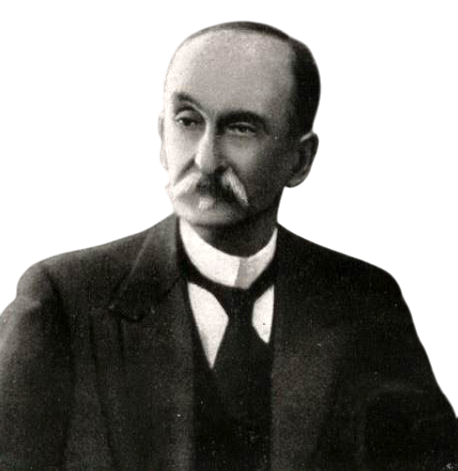
In 1885 the French committed to an entirely new rifle incorporating the state of the art, studying promising designs like the Remington-Lee and the newly introduced Mannlicher straight-pulls. In January 1886 the new minister of war, Georges Boulanger, «Général Revanche», scrapped those plans and set a one-year deadline for an infantry rifle using the two new inventions, in preparation for the expected war with the German Empire. Due to time constraints the rifle turned out an amalgam of then-current French service arms:
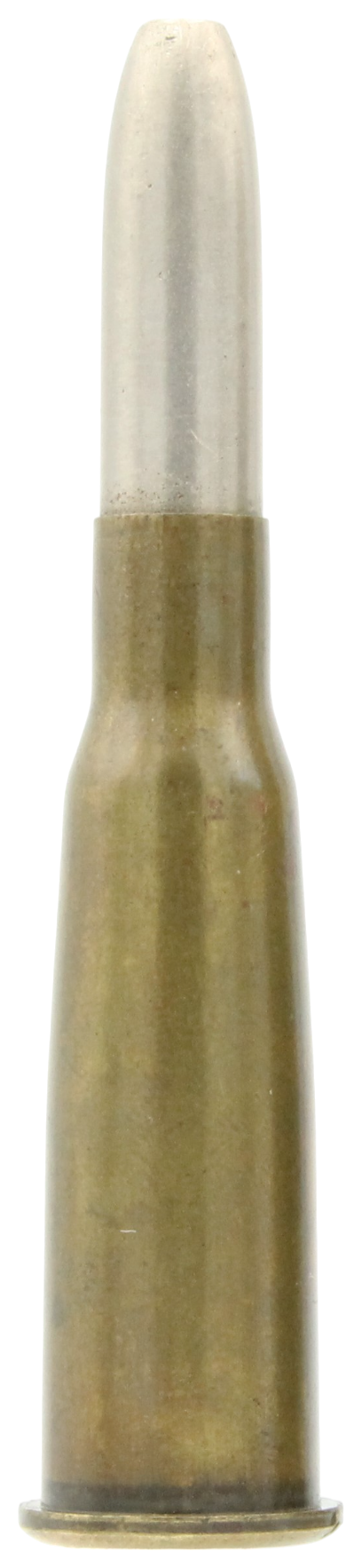
By 1889 the three state arsenals - Châtellerault, St-Etienne and Tulle - had largely completed the rearmament of the French army. A minor bolt update and a Steyr-style stacking rod came first; the bigger update of 1893 gave the rifle its designation Fusil Modèle 1886 M93: an improved gas check on the bolt head, a cocking piece reshaped to aid disassembly, and an improved rear sight fixture.
Despite the performance of 8mm Lebel leaving its contemporaries in the dust, the rifle it came with was all but outdated the moment it entered the world stage. Austria-Hungary adopted a rapid-loading system the same year, and once Poudre B reached the other great powers, native smokeless powders and more advanced rifles were a mere matter of time. Germany’s Commission Rifle of 1888 already paired the new ammunition advances with Mannlicher’s rapid-loading system.
This would forever prove the Lebel’s biggest drawback: a slow-to-load tubular magazine that resisted adaptation to the quick-loading devices being adopted worldwide - even in France herself, with the Mannlicher clip of the Mle 1890 Berthier carbine.
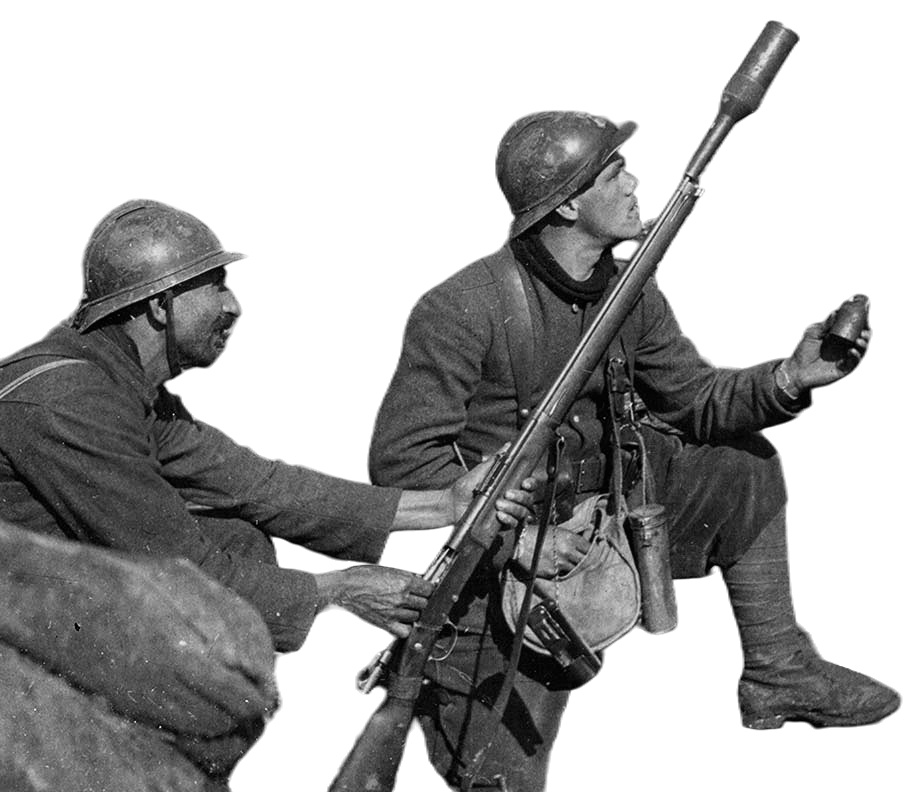
Despite this, the French held off on a new rifle or magazine system, already at work on the next great leap - a self-loading standard infantry rifle. And so French soldiers carried their outdated rifles into the Great War, where the Lebel became a symbol in French propaganda. Wartime modifications were few: a larger front sight post for quicker target acquisition, and a grenade-launching device - a role in which it excelled thanks to its massive build.
While outclassed technologically by allies and foes alike, the Lebel excelled at launching grenades across no man’s land. The rifle grenade became a staple of French doctrine when assaulting fortified positions.
Though it remained the standard infantry arm through 1918, it was slowly supplemented and ultimately replaced by the Modèle 1907/15 Berthier, whose manufacture was easier and cheaper. Yet the almost 3.5 million Lebels never disappeared, returning for World War II - France still on her quest for a universal auto-loader. The interwar years saw the M27 attempt to convert the pattern to a shortened, box-magazine model in an updated cartridge (too expensive to pull through), and a shortened three-round-tube pattern in 1935. The Lebel served far into the 20th century, notably in French colonies after 1945; only in 1949 - 63 years after adoption, with the Mle 1949 auto-loader finally in hand - was it laid to rest for good.
Mechanically it is a traditional turn-bolt: lifting the handle 90° moves the camming surfaces on bolt body and cocking piece against one another to cock the action. In the same motion the bolt head - separate, and not removable without tools, in line with French doctrine of the day - rotates 90°, either freeing the bolt to travel rearwards or locking the lugs into horizontal recesses in the receiver. The cocking piece often bears a second notch ahead of the sear catch as a “half-cock” safe position; the feature was dropped later and often removed during arsenal refurbishment.
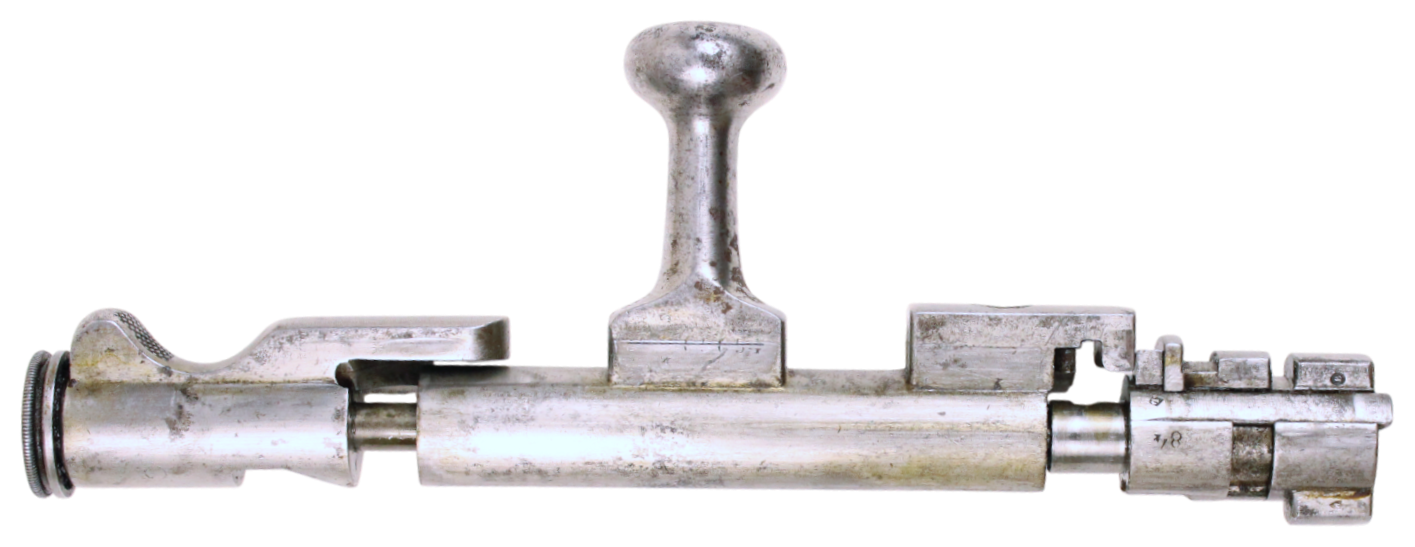
Despite its Kropatschek and Gras heritage, the Lebel bolt differs from both to accommodate the increased pressure of smokeless Poudre B. The main difference is two symmetrical locking lugs at the front, instead of locking at the bolt handle root as was common - and sufficient - before.
Considered the Lebel’s biggest flaw, its magazine was both standard technology at the time - see the German Gewehr 71/84 or the Portuguese Kropatschek - and dead on arrival with the dawn of quick-loading systems such as Mannlicher’s en-bloc clip.
The tube magazine is fundamentally the earlier Kropatschek style: eight rounds load into the tube, held back by the cartridge stop at its entrance. The bolt plays a vital role - travelling rearwards, its down-facing lug strikes the cartridge elevator assembly, tilting it upwards; the elevator releases the cartridge stop, and the follower pushes a new round onto the elevator. As the bolt closes after chambering, a second lever tips the elevator back down and the next cartridge is pushed on.
The setup holds more cartridges than the tube theoretically houses, with one on the lifter atop a full magazine. French doctrine did not entail a round ready in the chamber, owing to the lack of a proper safety system.
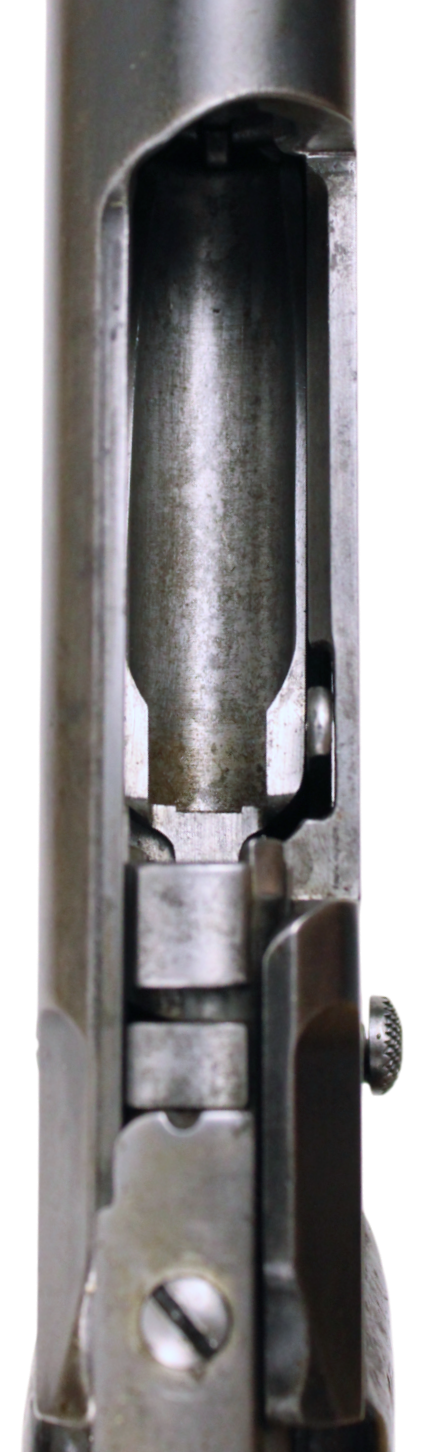
Two simple stamps on the receiver’s left side: “MANUFACTURE D’ARMES” with the arsenal’s location beneath in French script, and to the right the model designation, Mle 1886 M93.
Script letters followed by digits. The barrel mattered more to French thinking than the receiver, so it bears the “main” serial. Replaced buttstocks even had the wood section cut out and a fresh piece inlaid to stamp the serial anew. Found on barrel shank, buttstock, forestock, bolt handle root and bolt head.
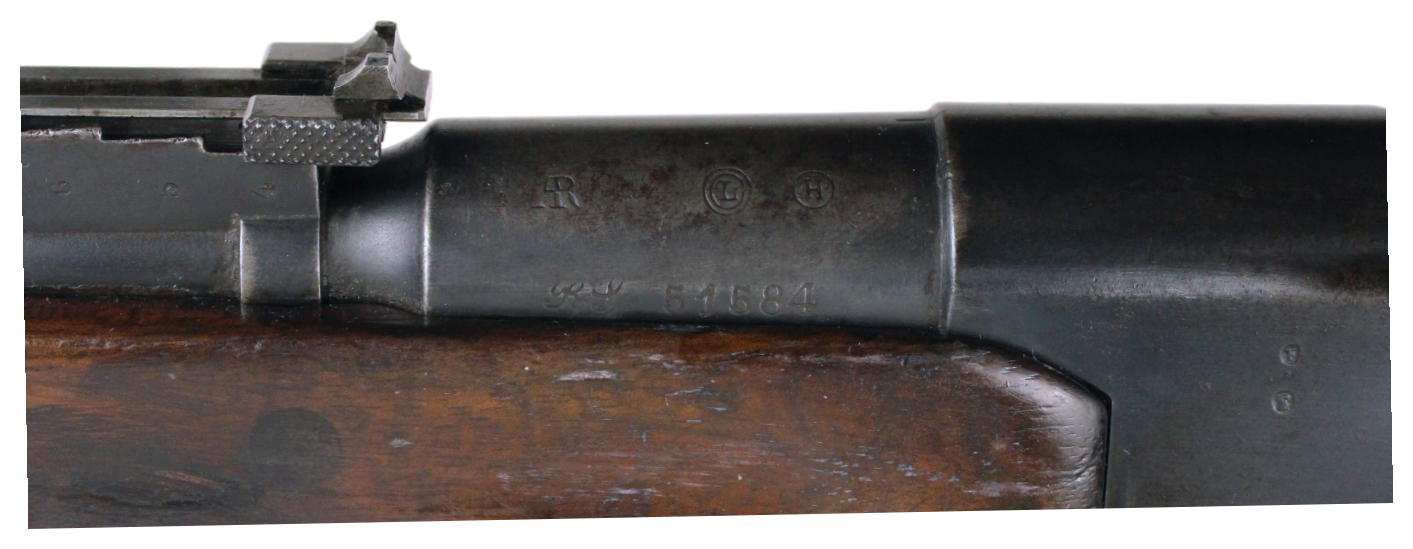
Two small encircled letters side by side stand for the Arsenal Director and Main Controller - somewhat like a signature. Left of those, an unencircled letter code identifies the steel mill that supplied the barrel steel. Position: barrel shank, left side.
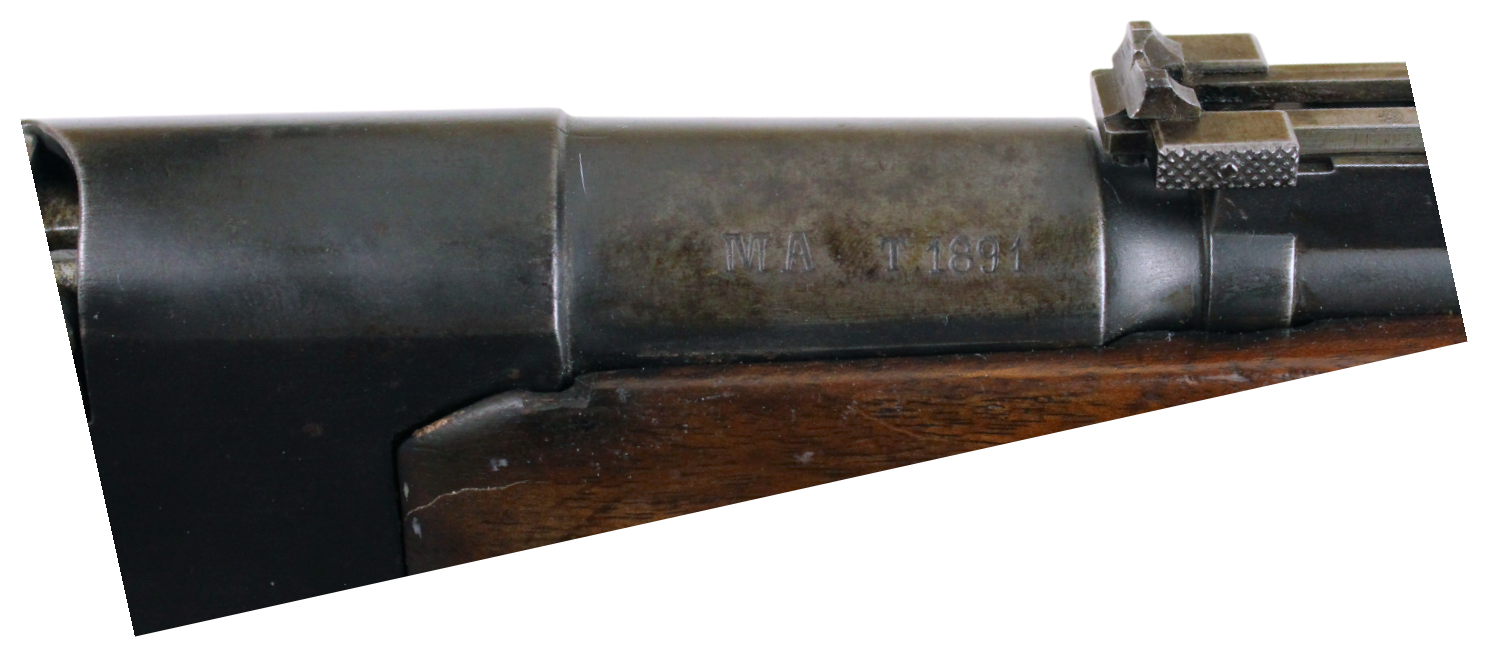
The only way to “date” a Lebel: a letter code for the producing arsenal (e.g. MAT - Manufacture d’armes de Tulle) and the year the barrel was made, on the barrel shank’s right side.
The development and introduction of the Lebel is much less a milestone in rifle design than in bullet design. The Modèle 1886 is a convergence point of two advances by two men: Swiss engineer Eduard Rubin (1846-1920) and French chemist Paul Vieille (1854-1934). Rubin had invented the jacketed bullet in 1882, giving far more stable projectiles that allowed higher velocities without disintegrating. The need for such a bullet occurred to the world in earnest only when Vieille, in 1884, invented Poudre B - made of stable nitrocellulose, the world’s first smokeless powder. Together they made higher-speed, smaller-diameter projectiles possible while leaving behind little residue.
Up to then the French had used models on par with their contemporaries, such as the Mle 1874 Gras and Mle 1878 Kropatschek - both of which would influence the Lebel heavily.
In 1885 the French committed to an entirely new rifle incorporating the state of the art, studying promising designs like the Remington-Lee and the newly introduced Mannlicher straight-pulls. In January 1886 the new minister of war, Georges Boulanger, «Général Revanche», scrapped those plans and set a one-year deadline for an infantry rifle using the two new inventions, in preparation for the expected war with the German Empire. Due to time constraints the rifle turned out an amalgam of then-current French service arms:
By 1889 the three state arsenals - Châtellerault, St-Etienne and Tulle - had largely completed the rearmament of the French army. A minor bolt update and a Steyr-style stacking rod came first; the bigger update of 1893 gave the rifle its designation Fusil Modèle 1886 M93: an improved gas check on the bolt head, a cocking piece reshaped to aid disassembly, and an improved rear sight fixture.
Despite the performance of 8mm Lebel leaving its contemporaries in the dust, the rifle it came with was all but outdated the moment it entered the world stage. Austria-Hungary adopted a rapid-loading system the same year, and once Poudre B reached the other great powers, native smokeless powders and more advanced rifles were a mere matter of time. Germany’s Commission Rifle of 1888 already paired the new ammunition advances with Mannlicher’s rapid-loading system.
This would forever prove the Lebel’s biggest drawback: a slow-to-load tubular magazine that resisted adaptation to the quick-loading devices being adopted worldwide - even in France herself, with the Mannlicher clip of the Mle 1890 Berthier carbine.
Despite this, the French held off on a new rifle or magazine system, already at work on the next great leap - a self-loading standard infantry rifle. And so French soldiers carried their outdated rifles into the Great War, where the Lebel became a symbol in French propaganda. Wartime modifications were few: a larger front sight post for quicker target acquisition, and a grenade-launching device - a role in which it excelled thanks to its massive build.
While outclassed technologically by allies and foes alike, the Lebel excelled at launching grenades across no man’s land. The rifle grenade became a staple of French doctrine when assaulting fortified positions.
Though it remained the standard infantry arm through 1918, it was slowly supplemented and ultimately replaced by the Modèle 1907/15 Berthier, whose manufacture was easier and cheaper. Yet the almost 3.5 million Lebels never disappeared, returning for World War II - France still on her quest for a universal auto-loader. The interwar years saw the M27 attempt to convert the pattern to a shortened, box-magazine model in an updated cartridge (too expensive to pull through), and a shortened three-round-tube pattern in 1935. The Lebel served far into the 20th century, notably in French colonies after 1945; only in 1949 - 63 years after adoption, with the Mle 1949 auto-loader finally in hand - was it laid to rest for good.
Mechanically it is a traditional turn-bolt: lifting the handle 90° moves the camming surfaces on bolt body and cocking piece against one another to cock the action. In the same motion the bolt head - separate, and not removable without tools, in line with French doctrine of the day - rotates 90°, either freeing the bolt to travel rearwards or locking the lugs into horizontal recesses in the receiver. The cocking piece often bears a second notch ahead of the sear catch as a “half-cock” safe position; the feature was dropped later and often removed during arsenal refurbishment.
Despite its Kropatschek and Gras heritage, the Lebel bolt differs from both to accommodate the increased pressure of smokeless Poudre B. The main difference is two symmetrical locking lugs at the front, instead of locking at the bolt handle root as was common - and sufficient - before.
Considered the Lebel’s biggest flaw, its magazine was both standard technology at the time - see the German Gewehr 71/84 or the Portuguese Kropatschek - and dead on arrival with the dawn of quick-loading systems such as Mannlicher’s en-bloc clip.
The tube magazine is fundamentally the earlier Kropatschek style: eight rounds load into the tube, held back by the cartridge stop at its entrance. The bolt plays a vital role - travelling rearwards, its down-facing lug strikes the cartridge elevator assembly, tilting it upwards; the elevator releases the cartridge stop, and the follower pushes a new round onto the elevator. As the bolt closes after chambering, a second lever tips the elevator back down and the next cartridge is pushed on.
The setup holds more cartridges than the tube theoretically houses, with one on the lifter atop a full magazine. French doctrine did not entail a round ready in the chamber, owing to the lack of a proper safety system.
Two simple stamps on the receiver’s left side: “MANUFACTURE D’ARMES” with the arsenal’s location beneath in French script, and to the right the model designation, Mle 1886 M93.
Script letters followed by digits. The barrel mattered more to French thinking than the receiver, so it bears the “main” serial. Replaced buttstocks even had the wood section cut out and a fresh piece inlaid to stamp the serial anew. Found on barrel shank, buttstock, forestock, bolt handle root and bolt head.
Two small encircled letters side by side stand for the Arsenal Director and Main Controller - somewhat like a signature. Left of those, an unencircled letter code identifies the steel mill that supplied the barrel steel. Position: barrel shank, left side.
The only way to “date” a Lebel: a letter code for the producing arsenal (e.g. MAT - Manufacture d’armes de Tulle) and the year the barrel was made, on the barrel shank’s right side.